Pitru Dosha Nivarana Pooja: A Ritual to Seek Peace for Ancestors and Remove Ancestral Curse
By Divine Center ·
Thinking of doing Pitru Dosha Nivarana Pooja? Know what ancestral dosha is, when families do this ritual, what happens during the puja, and what people commonly ask before booking.
What is Pitru Dosha?
Pitru Dosha is a condition in a person's horoscope - or in a family's experience - that is believed to arise when ancestors have not received proper rites after death, or when they passed away under difficult or unresolved circumstances. The word pitru means ancestors or forefathers, and dosha means a flaw or affliction.
In Hindu belief, when a person dies, their soul goes through a transition. Proper rituals - Shraddha, Tarpan, Pind Daan - help the soul move on peacefully. When these rituals are not performed correctly, are skipped over generations, or when the ancestor died with unfulfilled wishes or in tragic circumstances, the soul is believed to remain unsettled. That unsettled state can create patterns of difficulty in the lives of descendants - problems in marriage, health troubles, financial instability, repeated pregnancy loss, or a general sense that the family's progress is being blocked.
Pitru Dosha Nivarana Pooja is done specifically to address this - to perform the rites that should have been done, seek forgiveness from the ancestors, pray for their peace, and remove the ancestral influence that is affecting the living family.
Signs That a Family May Have Pitru Dosha
This is something many families ask about before deciding to do the puja. Pitru Dosha does not always show up in a horoscope reading. Sometimes families recognize it through patterns they have noticed over time.
Common signs include repeated delays or obstacles in marriage across the family, miscarriages or difficulty conceiving, children born with health difficulties, sudden and unexplained deaths in the family, financial problems that persist despite hard work, repeated illness in the household, family members having the same recurring dream of a deceased ancestor, or a general feeling that the family's efforts are not bearing fruit the way they should.
Not all of these signs mean Pitru Dosha is present. But when multiple patterns are seen together over years - especially across generations - families often consult a pandit or astrologer who then recommends the Nivarana Pooja.
When is Pitru Dosha Nivarana Pooja Done?
Pitru Paksha - Mahalaya Amavasya : This is the most important and auspicious time for any ancestor-related ritual. Pitru Paksha is a 16-day period in the Hindu calendar - usually in September or October - specifically set aside for performing Shraddha and Tarpan for ancestors. The last day, Mahalaya Amavasya, is considered the most powerful day to perform Pitru Dosha Nivarana Pooja. Families who have been meaning to do this puja for a long time often choose this day.
On Amavasya every month : The new moon day each month is considered auspicious for ancestor rituals. Families who want to do a monthly observance for their ancestors perform Tarpan and a small puja on this day.
After an astrologer identifies Pitru Dosha in a horoscope : When a person's Kundli shows Pitru Dosha - usually indicated by the Sun, Moon, or Rahu-Ketu positions in specific houses - the astrologer recommends the Nivarana Pooja as a remedy.
Before a marriage : When a marriage keeps getting delayed or falling through, and an astrologer or family elder attributes it to Pitru Dosha, the puja is done specifically to remove this block before the next alliance is pursued.
After a miscarriage or pregnancy loss : When a couple has experienced repeated pregnancy loss, Pitru Dosha is sometimes identified as a contributing factor and the Nivarana Pooja is done as part of the remedies.
At Gaya, Kashi, Rameshwaram, or Nasik : These are the most sacred places in India for performing Pitru Dosha rituals. Families travel specifically to these places - especially Gaya in Bihar, where Pind Daan is considered the most effective - to perform the puja at the holy site. If travel is not possible, the puja can be done at home with the right pandit.
What Happens During the Puja?
The ritual begins with Ganesh puja and Sankalpa - the formal statement of intention where the pandit mentions the names of the family, the names of ancestors being prayed for if known, and the purpose of the puja.
After the sankalpa, the main ritual involves three primary acts.
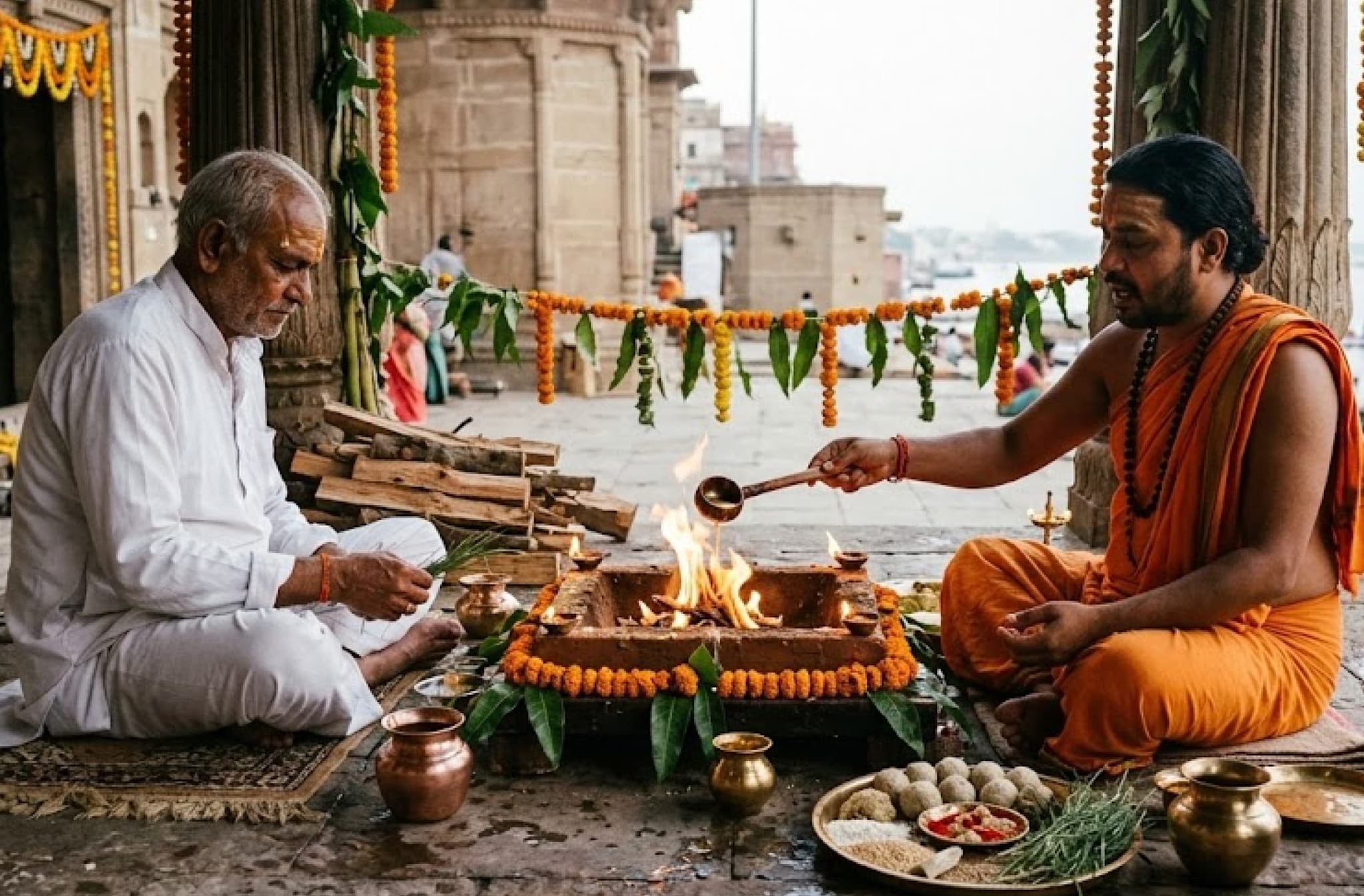
Tarpan : Water mixed with sesame seeds, barley, and kusha grass is offered to the ancestors while chanting their names and specific mantras. This offering is made three times - for the father's side ancestors, the mother's side ancestors, and ancestors who died without proper rites or whose names are unknown. Tarpan is the act of quenching the thirst of the ancestor souls and acknowledging their presence.
Pind Daan : Rice balls called pindas - mixed with sesame seeds, honey, and ghee are offered as symbolic food for the ancestors. Each pinda represents a specific ancestor or generation of ancestors. This is one of the most important acts in the ritual.
Havan for Pitru Shanti : A fire ritual is performed with chanting of Pitru Sukta and other ancestor mantras to pray for the peace of the souls and the removal of any dosha or ancestral influence on the family. Offerings of sesame, ghee, and black sesame seeds go into the fire.
After the havan, feeding of brahmins - or making a donation in their name - is done as a concluding act. The ritual takes 3 to 5 hours depending on the elaborateness of the puja.
Pind Daan - Why It Matters
Pind Daan deserves special mention because many families are not fully clear on what it is and why it is considered so important.
In Hindu belief, after death the soul goes through a transitional state before its next journey. During this period, it depends on the offerings made by descendants to nourish it and help it move forward. The rice ball - the pinda - is that offering. It is not just symbolic food. It is an acknowledgment that the ancestor existed, that they are remembered, and that the family is fulfilling its duty to them.
When Pind Daan has not been done for generations - either because the family did not know, or because the ritual was skipped due to circumstance - the ancestors are believed to remain in an incomplete state. Performing Pind Daan as part of the Nivarana Pooja is the act of completing that duty, even if late.
Many families who do this puja describe a feeling of closure afterward - a sense that something unfinished has been finished. That feeling is real regardless of what one believes about the afterlife.
Questions Families Commonly Ask
Q) Can Pitru Dosha Nivarana Pooja be done at home or must it be done at Gaya?
It can absolutely be done at home with the right pandit. Gaya, Kashi, Rameshwaram, and Nasik are considered more powerful because of their sacred geography and the tradition of performing these rituals there for thousands of years. But the puja done sincerely at home with proper vidhi is fully valid and effective. If you cannot travel, do not delay - have it done at home.
Q) What if we do not know the names of our ancestors?
This is very common. Many families - especially those who are several generations removed - do not know the names of their grandparents or great-grandparents. The pandit handles this by including a general offering for all unknown ancestors on both the father's and mother's side. The ritual covers them even without specific names.
Q) Does the eldest son have to be the one to perform the ritual?
Traditionally, the eldest son performs Shraddha and Tarpan. However, if the eldest son is not available, another son, a grandson, or even a daughter can perform it in many traditions. The key is that someone from the family performs it sincerely. Consult your pandit on what your specific tradition allows.
Q) Can a married woman do this puja for her parents' side ancestors?
Yes, in many traditions a married woman can perform Tarpan and Pind Daan for her parents' ancestors - especially if there are no male members in the family to do it. The tradition has evolved in many communities to allow this. Confirm with your pandit based on your family's tradition.
Q) How is Pitru Dosha different from Kaal Sarp Dosha?
Both are horoscope-based doshas but they are very different. Kaal Sarp Dosha is related to the positioning of all planets between Rahu and Ketu in the birth chart and has broader life implications. Pitru Dosha is specifically related to ancestors - their unsettled state and its effect on the family. Different pujas are done for each. An astrologer will identify which one applies to your situation.
Q) Does this puja need to be repeated every year?
The main Nivarana Pooja is typically done once - or until the family feels the issues have resolved. After that, doing Shraddha and Tarpan every year during Pitru Paksha is the regular ongoing practice. Mahalaya Amavasya Tarpan done annually keeps the ancestor connection in good standing.
Q) What is the difference between Shraddha and Tarpan?
Tarpan is the water offering made to ancestors - done as part of daily or monthly practice or during Pitru Paksha. Shraddha is the broader annual ritual that includes Tarpan, Pind Daan, feeding of brahmins, and prayers - done on the death anniversary of a specific ancestor or during Pitru Paksha. The Nivarana Pooja includes elements of both.
How to Book Pitru Dosha Nivarana Pooja
If you want to arrange Pitru Dosha Nivarana Pooja at home - including Tarpan, Pind Daan, and the Pitru Shanti Havan - Divine Center will connect you with experienced pandits who know the full vidhi for this ritual.
Share your situation, whether an astrologer has identified the dosha or you are doing it as a family decision, your preferred date - especially if you want it done during Pitru Paksha or on Amavasya - and your location. We will guide you on what to keep ready and arrange the right pandit for the puja.