Shani Shanthi Puja: A Ritual to Calm Saturn and Remove Its Ill Effects
By Divine Center ·
Thinking of doing Shani Shanthi Puja? Know what this Saturn remedy puja is, when to do it, what happens during the ritual, and what people commonly ask before booking.
What is Shani Shanthi Puja?
Shani Shanthi Puja is a ritual done to reduce the negative effects of Saturn - called Shani - in a person's horoscope. In Hindu astrology, Saturn is one of the most powerful and slow-moving planets. When placed unfavorably or when its major period is active, it is believed to bring delays, obstacles, financial difficulties, health problems, and prolonged hardship.
The puja does not ask Saturn to leave or be defeated. It asks for his grace. Shani is not considered an enemy - he is the planet of karma, justice, and discipline. The ritual is an acknowledgment of that karma and a sincere prayer for his compassion during a difficult period.
When is Shani Shanthi Puja Done?
During Sade Sati : The most common reason. Sade Sati is a seven-and-a-half-year period when Saturn transits through the 12th, 1st, and 2nd houses from a person's moon sign. It is considered one of the most testing periods in a person's life. Shani Shanthi Puja is done to ease its effects.
During Shani Dasha or Antardasha : When Saturn's major period or sub-period is active in the birth chart and is causing clear difficulties - job loss, financial problems, health issues, relationship strain - the puja is done as a remedy.
On Shani Jayanti : Saturn's birthday, which falls on Amavasya in the Jyeshtha month - usually May or June - is the most auspicious day for this puja.
Every Saturday : Saturday is Shani's day. Regular Saturday worship at a Shani temple or at home is a common ongoing practice for those going through a difficult Saturn period.
When an astrologer identifies Shani Dosha : After a horoscope reading that shows Saturn causing harm - through aspects, placement, or transit - the astrologer recommends this puja as a primary remedy.
What Happens During the Puja?
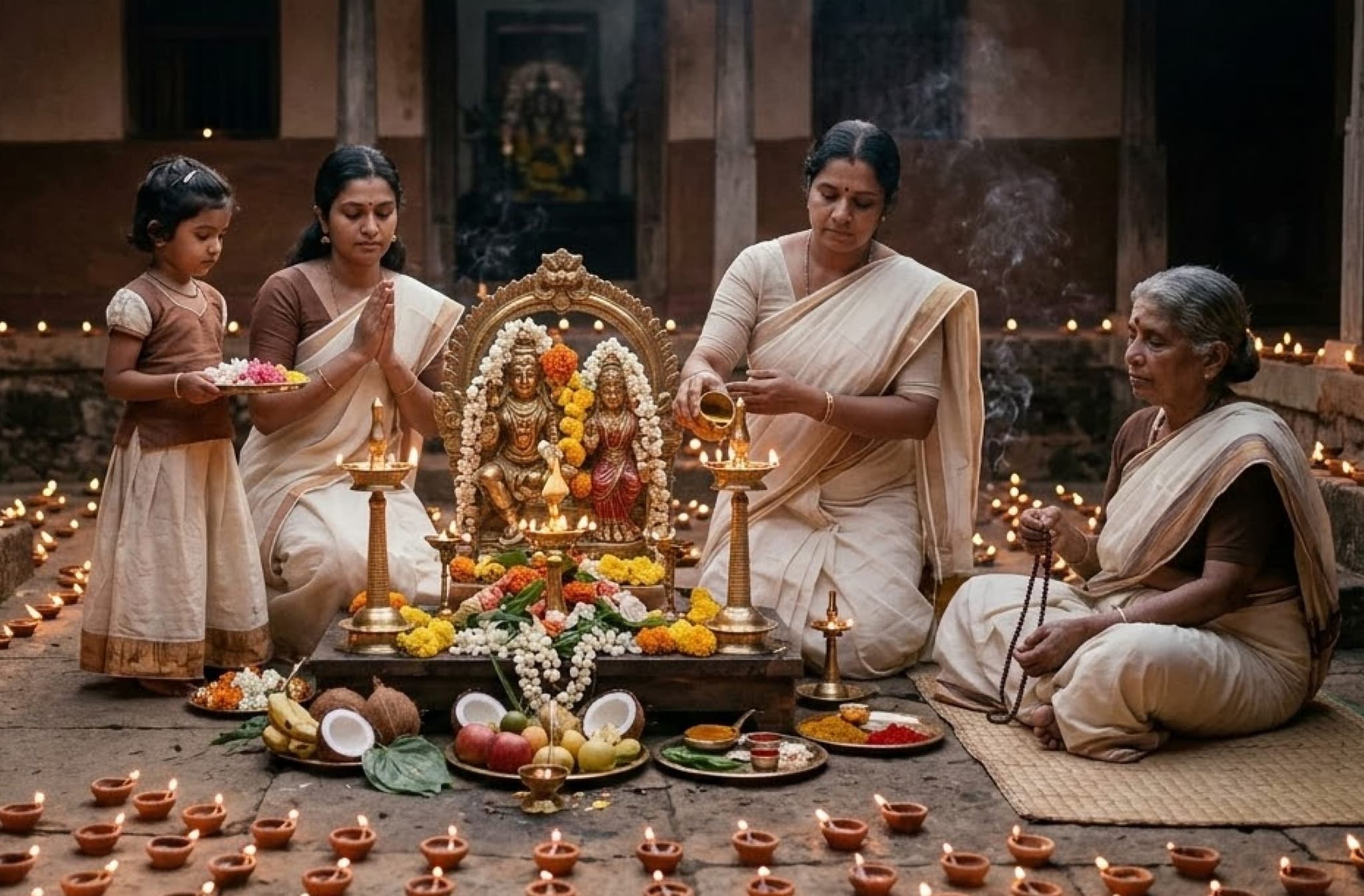
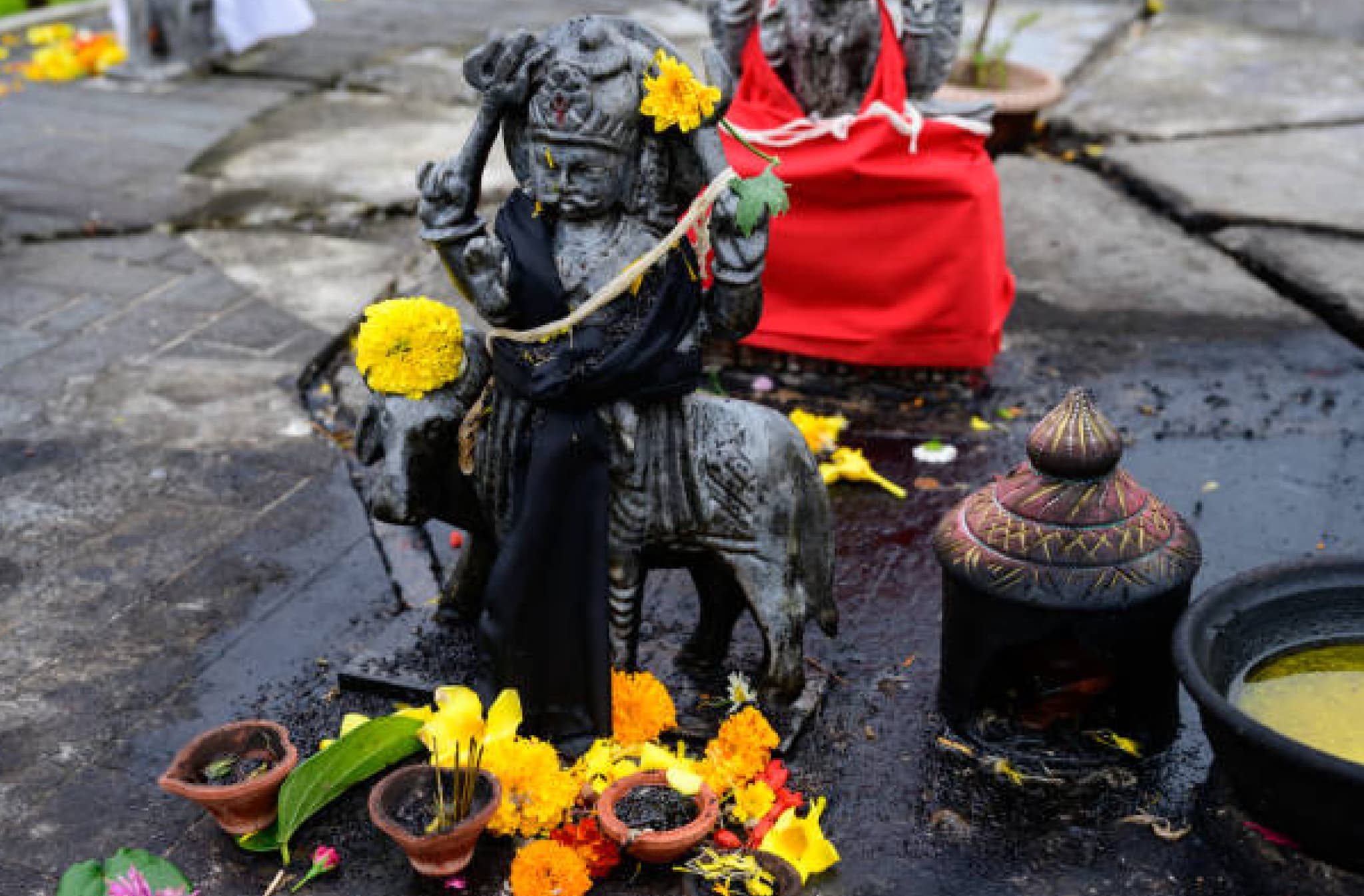
The pandit begins with Ganesh puja. A Shani idol or image - Lord Shani is depicted as dark-complexioned, seated on a crow or vulture, holding a sword and a trident - is placed at the puja space.
Abhishekam is done with sesame oil - this is the most distinctive part of Shani worship. Black sesame seeds, black cloth, iron items, and blue or black flowers are offered. The pandit chants the Shani Stotram, Shani Kavacham, and the Shani Mantra - "Om Sham Shanaischaraya Namah" - a set number of times. A havan with sesame seed offerings may also be included.
The puja takes 2 to 3 hours. On Saturdays, many families do a simpler home version - lighting a sesame oil lamp, offering black sesame seeds, and reciting the Shani Stotram - which takes under an hour.
Questions Families Commonly Ask
Q) Is Shani always harmful?
No. Saturn gives very good results when well-placed or when the person has been living with discipline and integrity. It rewards hard work and punishes shortcuts. The difficulties during Sade Sati or Shani Dasha are not punishment - they are karmic adjustments. The puja helps ease the transition, not escape the karma.
Q) Can Shani Shanthi Puja stop Sade Sati completely?
No puja stops a planetary period. What it does is soften the experience - reduce unnecessary suffering, bring clarity, and open doors that felt permanently closed. People who do the puja regularly during Sade Sati generally find the period more manageable than those who do not.
Q) Is Hanuman Puja also a remedy for Saturn?
Yes. Lord Hanuman is considered a powerful protective force against Saturn's difficult effects. Many people do both - Shani Shanthi Puja and a Hanuman Puja on Saturdays - as a combined remedy. The two work well together.
Q) How often should this puja be done?
Once as a formal ritual when the difficult period begins. After that, regular Saturday worship - at home or at a Shani temple - is the ongoing practice. Some families do the full puja annually on Shani Jayanti.
Q) What should be avoided during Shani Dasha or Sade Sati?
Starting major new ventures without checking the muhurta, making large investments impulsively, and skipping the Saturday worship practice are the main things to be careful about. Living honestly, being patient, and doing consistent work matter more than any ritual during this period.
Understanding Shani - Who He Really Is ?
Shani is one of the most misunderstood deities in Hindu tradition. He is not a malicious force - he is the planet of karma and justice. He gives everyone exactly what their actions have earned. His periods are difficult because they force a reckoning - with habits, choices, and patterns that have been building up.
Most people who come out of a Sade Sati or a difficult Shani Dasha say the same thing in hindsight - it was hard, but it changed them. It stripped away what was not real and left what was. The puja does not ask Shani to look away from that process. It asks him to be gentle with it.
How to Book Shani Shanthi Puja
If you want to arrange Shani Shanthi Puja at home - for Sade Sati relief, Shani Dasha remedy, or Shani Jayanti - Divine Center will connect you with an experienced pandit who knows the full Shani Shanthi vidhi including the Kavacham, Stotram, and sesame oil abhishekam.
Share your situation, your preferred date - Saturday or Shani Jayanti work well - and your location. We will guide you on the samagri and arrange the right pandit.