Lakshmi Narasimha Homam: A Havan for Protection, Fear Removal, and Divine Grace
By Divine Center ·
Thinking of doing Lakshmi Narasimha Homam? Know what this powerful Vishnu havan is, when families do it, what happens during the ritual, and what people commonly ask before booking.
What is Lakshmi Narasimha Homam?
Lakshmi Narasimha Homam is a Vedic fire ritual that invokes both Lord Narasimha and Goddess Lakshmi together. Lord Narasimha is the fourth avatar of Lord Vishnu - a fierce, half-lion half-man form that appeared to protect his devotee Prahlada from the demon king Hiranyakashipu. Goddess Lakshmi, his consort, is invoked alongside him to bring grace, calm, and abundance after the fierce protective energy of Narasimha does its work.
This combination is what makes Lakshmi Narasimha Homam unique among protection pujas. Lord Narasimha provides the fierce, cutting protection - destroying evil, removing enemies, and eliminating fear. Goddess Lakshmi brings the grace - prosperity, peace, and restoration after the storm. Together they represent the complete divine response to a family's suffering - protection and healing in one ritual.
This homam is particularly recommended when someone is living in prolonged fear, facing enemies or threats, or when a family has been going through suffering that has both a fearful and a material dimension - loss of peace and loss of prosperity at the same time.
The Story Behind Lord Narasimha
Understanding who Lord Narasimha is makes this puja feel very different from a routine ritual.
Prahlada was a young boy - son of the demon king Hiranyakashipu - who was an unshakeable devotee of Lord Vishnu. His father, who had a boon making him impossible to kill by man or animal, by day or night, inside or outside, on earth or in the sky, with any weapon - hated his son's devotion and tried repeatedly to kill him. Every attempt failed.
Finally, in a rage, Hiranyakashipu asked Prahlada where his Vishnu was - was he in this pillar? And Prahlada said yes, Vishnu is everywhere. The king struck the pillar. And from it emerged Narasimha - neither man nor animal, appearing at dusk - neither day nor night - on the threshold - neither inside nor outside - and placed Hiranyakashipu on his lap - neither on earth nor in the sky - and destroyed him with his claws - not a weapon.
Every condition of the boon was fulfilled, and yet the demon was destroyed. This story is the reason Narasimha is invoked when the problem seems to have no solution - when every door appears closed and the situation feels impossible. He is the deity who finds the way through what seems impossible.
When is Lakshmi Narasimha Homam Done?
When living in fear or under threat : If someone in the family is living with prolonged fear - from a threatening person, an enemy, a dangerous situation, or even an unnamed dread that will not lift - Lakshmi Narasimha Homam is done to seek Narasimha's protection and cut through that fear.
When facing powerful enemies : Legal battles, workplace enemies, business rivals acting in bad faith, or any situation where someone feels they are being actively harmed by another person - this havan is done to seek Narasimha's fierce protection and victory.
When black magic or evil eye is suspected : Narasimha is considered one of the most powerful deities for cutting through black magic, evil eye, and deliberate harm. Families who believe they are under such influence do this havan for removal and protection.
On Narasimha Jayanti : The birthday of Lord Narasimha - which falls on the 14th day of the bright fortnight of Vaishakha month, usually in April or May - is the most auspicious day for this homam. Families who worship Narasimha regularly do the havan on this day every year.
When prosperity has left the family : When both peace and financial stability seem to have disappeared at the same time - repeated losses, family troubles, and fear all happening together - the combination of Lakshmi and Narasimha in one homam addresses both dimensions.
For children living in fear : Young children who are persistently fearful, having nightmares, or suffering from an inexplicable anxiety are often brought to this havan. Narasimha's protection is specifically associated with protecting children and devotees who cannot protect themselves.
For overall family protection : Some families do this homam annually as a protective ritual - not because something is specifically wrong, but to keep the family under Narasimha's protection through the year.
What Happens During the Puja?
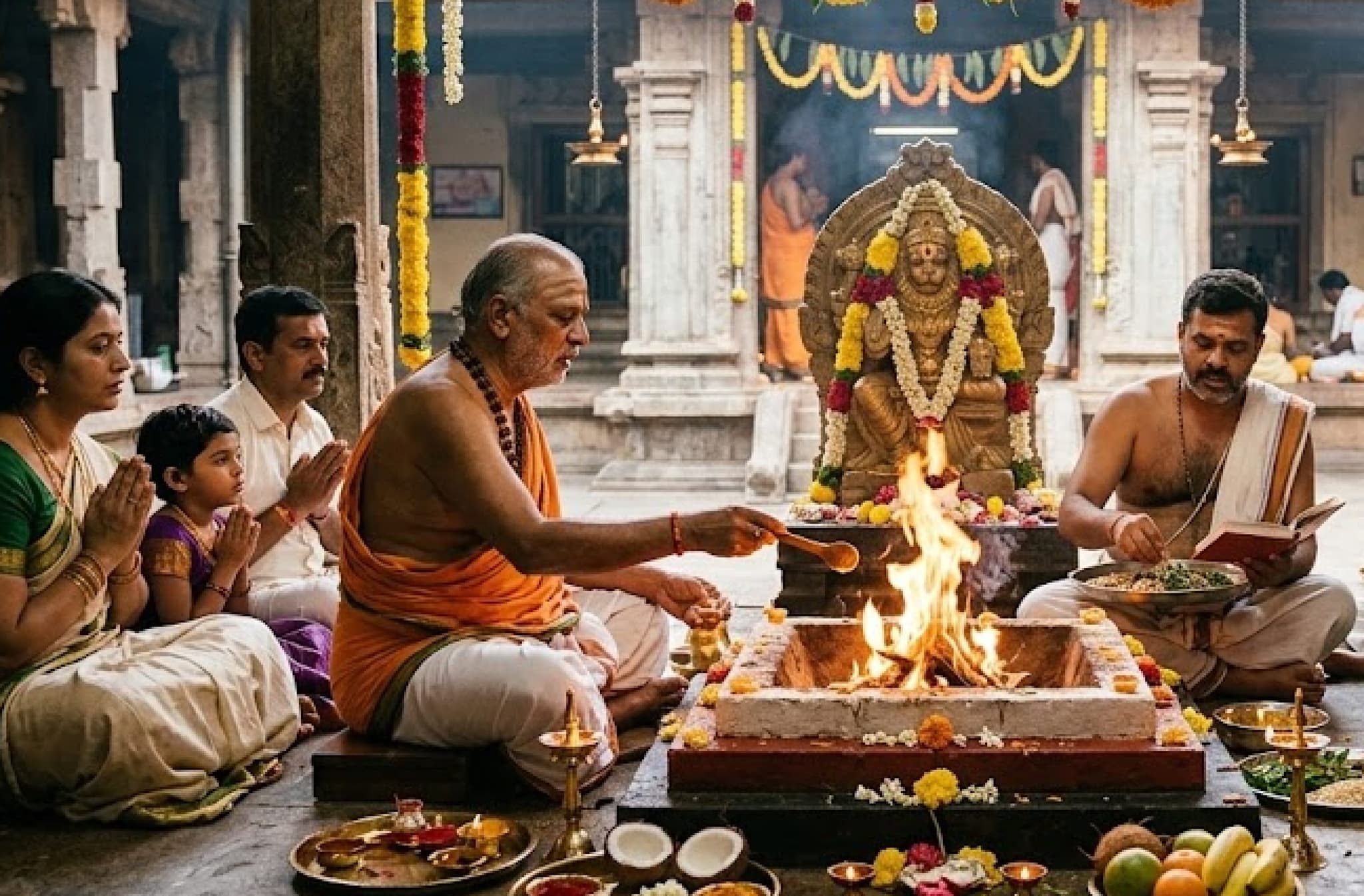
The pandit begins with Ganesh puja and Kalash sthapana. A Narasimha idol or image - often showing Lord Narasimha with Goddess Lakshmi seated on his lap - is placed at the puja space and worshipped before the havan begins.
The havan kund is set up and lit. The pandit chants the Narasimha Kavacham - the protective armor hymn of Lord Narasimha - along with the Narasimha Mantra, the Ugra Narasimha Stotram, and specific Vishnu mantras. Offerings of ghee, sesame seeds, lotus flowers, tulsi, bilva, and yellow flowers are made into the fire with each repetition.
A key part of Lakshmi Narasimha Homam is the chanting of the Narasimha Kavacham - a powerful protective hymn that is believed to create a shield of divine protection around the person and family it is chanted for. Many devotees consider the Kavacham the heart of this ritual.
After the main havan, a Lakshmi Puja is performed - to invite the grace and abundance of Goddess Lakshmi into the family after Narasimha's fierce energy has done its protective work. Prasad typically includes yellow sweets, bananas, and tulsi leaves.
The ritual takes 3 to 4 hours. A morning muhurta is preferred, and the person being prayed for should be present for at least the main portion of the havan.
The Narasimha Kavacham - What It Does
The Narasimha Kavacham deserves a separate mention because it is one of the most powerful protective hymns in the Vaishnava tradition and is the centerpiece of this homam.
Kavacham means armor. The Narasimha Kavacham is a hymn that invokes Lord Narasimha to protect every part of the devotee's body, mind, and life - from head to toe, from the home to the work to the relationships, from the visible to the invisible threats. Each verse of the Kavacham places Narasimha's protection on a specific aspect of life.
When chanted into the havan fire with offerings at each verse, it is believed to create a protective layer around the person and family that is difficult for any negative force to penetrate. Many families who have done this homam describe a distinct shift in the feeling of safety and security in their home after the ritual.
Questions Families Commonly Ask
Q) How is Lakshmi Narasimha Homam different from Sudarshana Homam?
Both are Vaishnava protection pujas and both address evil, enemies, and negative energies. The key difference is in the deity and the energy. Sudarshana Homam invokes the Sudarshana Chakra - the divine disc - which cuts through negative influences with speed and precision. Lakshmi Narasimha Homam invokes Lord Narasimha directly - a more personal, fierce, and emotionally immediate form of protection. Narasimha is the deity who came when his devotee called, and that personal responsiveness is why people choose this homam for situations involving deep fear and feeling completely unprotected.
Q) Can this homam be done for a child?
Yes. Narasimha is especially associated with protecting children and those who cannot protect themselves. His entire story is about appearing to protect a child - Prahlada - from a powerful enemy. Many families do this havan specifically for a child who is going through fear, illness, or persistent difficulty.
Q) What is the difference between Ugra Narasimha and Lakshmi Narasimha?
Ugra Narasimha is the fierce, wrathful form - invoked specifically for destruction of enemies and removal of very dark influences. Lakshmi Narasimha is the same lord but in a more balanced form - with Goddess Lakshmi present, calming his fierce energy and adding grace and prosperity to the ritual. For most family situations - protection, fear removal, prosperity - Lakshmi Narasimha is the recommended form. For very extreme situations, the pandit may recommend Ugra Narasimha instead.
Q) Is this homam only for Vaishnavas?
No. While Narasimha worship is part of the Vaishnava tradition, this homam is done by families across Hindu traditions. Lord Narasimha's protection is not sectarian - anyone seeking protection and grace can do this havan.
Q) What is the best day to do this homam?
Narasimha Jayanti is the most auspicious day. Saturdays and Ekadashi - the 11th day of the lunar fortnight - are also favorable. In urgent situations, the pandit will select the next available auspicious muhurta.
Q) How long does the homam take?
Typically 3 to 4 hours from start to finish. Plan for a morning slot. The pandit will advise on the muhurta based on your date and location.
Q) Can it be done for someone who is not present at the havan?
Yes. The person's name and gotra are mentioned in the sankalpa at the start of the puja. The ritual reaches them even if they are in a hospital, another city, or unable to attend.
Why Narasimha Is Called the Deity of Impossible Situations
There is a reason devotees of Narasimha say - call him when every door is closed. The story of his appearance is precisely about a situation that had no solution. The boon Hiranyakashipu had received should have made him impossible to defeat. Every logical path was blocked.
And yet Narasimha appeared - from a pillar, at dusk, on the threshold, using claws - fulfilling every condition of the boon while simultaneously defeating its purpose. He found the path that did not exist.
That is why families in genuinely impossible-feeling situations turn to this homam. Not because they believe in a magic solution, but because they believe in a force that can find a way through when they cannot see one. The act of doing the havan - sitting around the fire, hearing the Kavacham chanted, making the offerings - is itself an act of placing the situation in that force's hands. And for most families who have done it in their darkest moments, that is enough to take the next step.
How to Book Lakshmi Narasimha Homam
If you want to arrange Lakshmi Narasimha Homam at home - for protection, fear removal, enemy protection, or bringing back peace and prosperity - Divine Center will connect you with experienced pandits who know the full homam vidhi including the Narasimha Kavacham and the Lakshmi Puja.
Share your situation, preferred date, and location. We will guide you on the samagri, the muhurta, and what to keep ready at home before the pandit arrives.