Chandi Homam: A Powerful Havan for Protection, Victory, and Removal of Evil
By Divine Center ·
Tags chandi homam, chandi havan, durga homam, devi mahatmyam homam, chandi path homam, goddess chandi puja, navchandi homam, protection homam, enemy removal puja, chandi homam benefits, shakti homam, chandi puja
What is Chandi Homam?
Chandi Homam is one of the most powerful fire rituals in the Hindu tradition. It is done by chanting the Devi Mahatmyam - also known as the Chandi Path or Durga Saptashati - a sacred text of 700 verses from the Markandeya Purana that describes the victories of Goddess Chandi over demonic forces. These verses are chanted while making offerings into the sacred fire, invoking the fierce and protective form of the Divine Mother.
Goddess Chandi is not a gentle, wish-fulfilling deity. She is the fierce, warrior form of Devi - the one who fights, destroys evil, and protects her devotees with absolute force. Invoking her through this havan is done when the situation is serious - when someone is facing enemies, prolonged suffering, evil influences, or obstacles that feel too heavy to overcome on their own.
This is considered one of the most intense and effective rituals in Shakti worship. It is not done lightly - the commitment, the preparation, and the sincerity required are significant. But for the situations it is meant for, very few pujas come close to its power.
When is Chandi Homam Done?
Chandi Homam is not a routine calendar puja. Families come to it when the situation demands something serious.
When facing enemies or legal battles : Chandi Homam is one of the strongest pujas done when someone is in a prolonged conflict - a bitter legal case, workplace enemies, family disputes that have gone far, or any situation where someone feels actively threatened. The ritual is done to seek Devi's protection and victory.
When suffering from black magic or evil eye : If a family believes they are under the influence of black magic, a curse, or deliberate harm from someone, Chandi Homam is done to cut those influences and restore protection.
During Navaratri : The nine nights of Navaratri are the most auspicious time for Chandi Homam. Many temples and families do it specifically during this period - each of the nine days being associated with a different form of Devi. Doing the havan during Navaratri is considered especially powerful.
When going through prolonged suffering : Long-term illness, repeated failures, financial collapse, broken relationships - when nothing seems to be working and the suffering feels relentless, families do Chandi Homam as a way of asking Devi to intervene and cut through what is keeping things stuck.
For protection of the family : Some families do Chandi Homam periodically - every year or every few years - purely as a protective ritual for the household. Not because something is wrong, but to keep the family under Devi's protection.
Before a major confrontation or challenge : Court hearings, important negotiations, major surgeries, or any event where the stakes are very high - Chandi Homam is done beforehand as a prayer for strength, protection, and victory.
What Happens During the Puja?
The ritual begins with Ganesh puja and Kalash sthapana. A Chandi Yantra or an image of Goddess Durga or Chandi is placed at the puja space and worshipped before the havan begins.
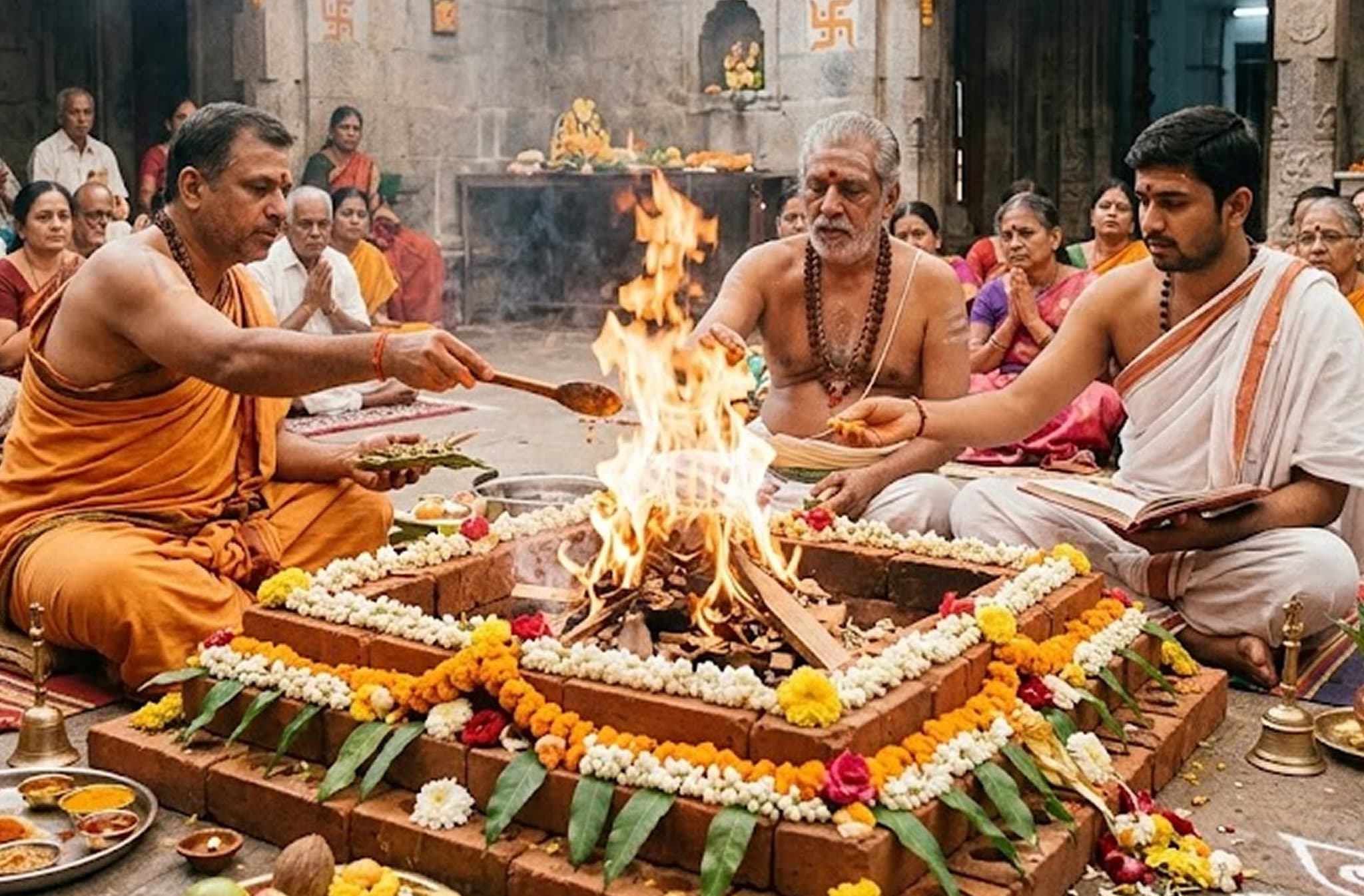
The havan kund is set up and lit. The pandit then begins chanting the Devi Mahatmyam - all 700 verses - while making offerings into the fire. The Devi Mahatmyam is divided into three parts called Charitas, each describing a different battle of Devi against demonic forces. Each Charita has specific mantras and offerings associated with it.
Offerings include ghee, sesame seeds, red flowers - especially red hibiscus - bilva leaves, coconut, and specific items prescribed for Shakti worship. The number of times the Devi Mahatmyam is chanted depends on the scale of the puja - once for a standard havan, nine times for a Navchandi Homam, and 108 times for a Shatachandi Homam.
After the main havan, a Kumari Puja - worship of young girls as living forms of Devi - is traditionally done as part of the ritual. The puja closes with aarti, prasad distribution, and feeding of brahmins.
The ritual takes 4 to 6 hours for a standard Chandi Homam. Navchandi and Shatachandi take multiple days and require multiple pandits.
Types of Chandi Homam
This is important to understand before booking, as the scale and duration vary significantly.
Ekachandi Homam : The Devi Mahatmyam is chanted once. Done by one or two pandits. Takes 4 to 6 hours. Suitable for individual family needs - protection, obstacle removal, legal battles, or black magic removal.
Navchandi Homam : The Devi Mahatmyam is chanted nine times. Usually done over one full day with multiple pandits. Considered nine times more powerful than Ekachandi. Done for more serious situations or during Navaratri.
Shatachandi Homam : The Devi Mahatmyam is chanted 108 times. This is a multi-day ritual requiring a group of experienced pandits. Done at temples or large ritual spaces. Reserved for the most serious situations or large community pujas.
Most families doing this havan at home go with Ekachandi or Navchandi. Your pandit will recommend which is appropriate for your situation.
Questions Families Commonly Ask
Q) How is Chandi Homam different from Durga Puja?
Durga Puja - especially as celebrated in Bengal and East India - is a community festival involving idol worship over several days. Chandi Homam is a fire ritual specifically done by chanting the Devi Mahatmyam into a havan kund. Both invoke the same goddess but through very different forms. The homam is more intense and targeted - done for specific situations rather than as a community celebration.
Q) Is Chandi Homam only for serious problems?
Not necessarily. Many families do it during Navaratri as a regular protective ritual or as a yearly tradition regardless of whether there is a specific problem. However, most people who come to it are dealing with something serious. The intensity of the ritual makes it more suitable for significant situations than for everyday needs.
Q) What is Kumari Puja and is it necessary?
Kumari Puja is the worship of young girls as living embodiments of Devi. It is traditionally part of Chandi Homam and is considered essential by many pandits. The girls are bathed, dressed in new clothes, worshipped with flowers and kumkum, fed a meal, and given dakshina. It is a beautiful part of the ritual. If you cannot arrange it for practical reasons, discuss with your pandit - some traditions allow it to be done symbolically.
Q) Can Chandi Homam be done for a woman going through a difficult time?
Yes. Devi - the Divine Mother - is particularly invoked for women who are suffering. Many women going through health crises, troubled marriages, injustice, or prolonged hardship do Chandi Homam specifically. It is seen as going to the Mother directly and asking for her intervention.
Q) How many pandits are needed?
For Ekachandi, one experienced pandit is sufficient. For Navchandi, two to four pandits are recommended. For Shatachandi, a larger group of pandits is required and it is usually done at a temple.
Q) What is the best time to do Chandi Homam?
Navaratri is the most auspicious time. Ashtami - the eighth day of the lunar fortnight - is also considered very powerful for Shakti rituals. Friday is the day associated with Devi worship. In urgent situations, the pandit will select the next available auspicious muhurta.
The Devi Mahatmyam - What Is Being Chanted
Most people attending a Chandi Homam do not know what is being chanted through the ritual. Understanding it adds a completely different dimension to the experience.
The Devi Mahatmyam tells three stories. In the first, Devi appears as Mahakali and defeats two demons - Madhu and Kaitabha - who are threatening creation. In the second, she appears as Mahalakshmi and destroys the demon king Mahishasura after a fierce battle. In the third, she appears as Mahasaraswati and defeats Shumbha and Nishumbha - demons who had conquered the heavens and were tormenting the world.
Each story is a metaphor. The demons represent the forces of ego, arrogance, and darkness - both in the world and inside each person. Devi's victory is not just an external battle. It is a reminder that these forces can be overcome. Hearing these verses chanted into a fire, with offerings going in at each repetition, is an experience that stays with people long after the havan is over.
How to Book Chandi Homam
If you want to arrange Chandi Homam at home - for Ekachandi or Navchandi - Divine Center will connect you with experienced pandits who know the full Devi Mahatmyam recitation, the Chandi Yantra puja, and the Kumari Puja ritual.
Share your situation, the type of Chandi Homam you are considering, your preferred date, and your location. We will help you plan the right scale of ritual, guide you on the samagri and Kumari Puja arrangements, and make sure everything is done properly.